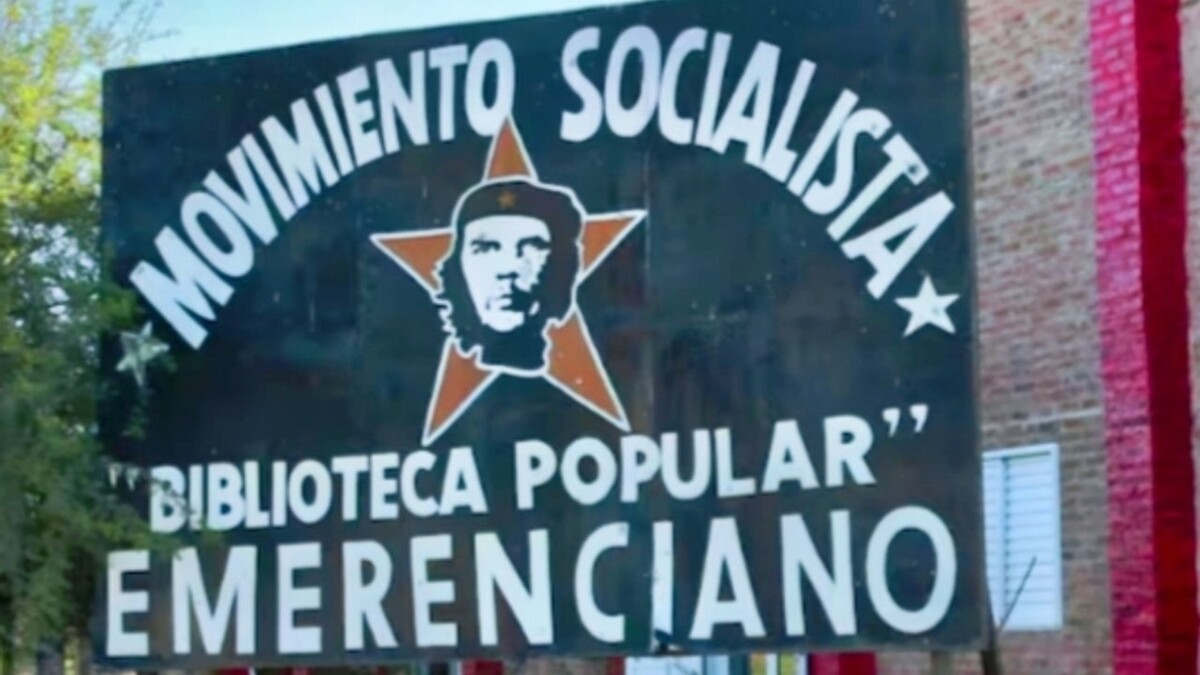
When such topics arise, the government must show strength and concern. They were close to Governor Capitanich, who was also the best man at Emerenciano's wedding. The delegation of state functions to social organizations was one of the most nefast actions of the Kirchners, and all ended in corruption, violence, and death. A more active government is needed in the fight against corruption. Milei is lucky, facing the weakest Peronism in years with CFK concerned about her legal front and distancing herself from her balcony antics. In all polls, the issue of corruption has started to appear with emphasis, and it is a topic that the government does not seem to have on its agenda. Moyano has been friends with many politicians and is now facing his decline. The people suffer from austerity and need their efforts to be compensated by seeing corrupt people in jail. Citizens need to see that their efforts are not in vain. It is time to support the population's desire to pursue corruption, and the unions should be in the spotlight to weaken them and push for union reform. The government does not talk about the catastrophic situation of the Moyanos, whose social security is exploited and has many corruption suspicions. Milagro, with state money, was the owner of Jujuy, and the stories of corruption and violence against those who disobeyed are the clearest proof that the Kirchners did nothing virtuous, they only empowered criminals who subdued the population. Peronism is busy with internal conflicts and will bleed out in infighting. When that doesn't happen, distrust grows. No one in the government talks about the issue. Regardless of the brutality of the crime, it is time to reflect on how these 'popular militant' organizations flourished during the Kirchner era, were state-funded, and performed functions that corresponded to the state, becoming masters of places where they subdued the population, persecuted opponents, and embezzled public money as they had no state control. It is necessary to remember history so that it does not repeat. 'Justice for Cecilia': the phrase that fills Chaco as it awaits a verdict in the Cecilia trial. The issue of corruption, absent from the official agenda. National politics is calmer, and the government has no opposition. How to forget the construction of houses in the 'Shared Dreams' project led by Hebe de Bonafini and parricide Sergio Shoklender, which resulted in a fiasco after the K government gave them millions that literally disappeared without any houses being built. Milagro Sala is another example showing that it was a methodology to feed money to supposed social movements that ended up being authoritarian and corrupt leaders. Buenos Aires, November 16 (NA) Cesar Sena, Emerenciano Sena, and Marcela Acuña were found guilty of the death of Cecilia Strzyzowski and will surely be sentenced to life in prison. Spagnuolo and several more from the disability scheme's illicit plot have just been called to testify. They were a criminal organization that reproduced models where criminals and authoritarians flourished. To govern is to explain. They received millions for the construction of schools and health centers that were supposed to be built by the state, which has controls.